
Solar Water Heater
- Home
- Solar Water Heater

Solar Water Heater
With more people discovering the numerous advantages of renewable energy on the environment and their savings, solar-power energy solutions are gaining popularity and acceptance towards sustainable living.
Among the superior alternatives available for an eco-friendly approach are the solar water heaters, also known as the solar domestic water heating systems. Besides being one of the best choices to get hot water for your home and business, solar water heaters are cost-effective. Designed in such a way to save you from high electricity bills, solar water heaters use abundant renewable solar energy as a fuel to heat water for washing, cleaning and bathing.
The choice of heating system depends on heat requirement, weather conditions, heat transfer, fluid quality, space availability and annual solar radiation.
Budding Leaf Infratech is acclaimed for providing the long-lasting and highly-efficient solutions for solar water heating systems.
TYPES OF SOLAR WATER HEATERS
Broadly, solar water heating systems are of two types: closed loop system and open loop system
- In the first one, heat exchangers are installed to protect the system from hard water obtained from bore wells or from freezing temperatures in the cold regions.
- In the other type, either thermo syphon or forced circulation system, the water in the system is open to the atmosphere at one point or other. The thermo syphon systems are relatively inexpensive. They are suitable for domestic and small institutional systems, provided the water is treated and potable. The forced circulation systems employ electrical pumps to circulate the water through collectors and storage tanks.
Benefits of Solar Water heater
- Operates without fuel/electricity
- Highly beneficial during winters
- High efficiency, low heat loss
- Longer operating life
- Minimal maintenance cost
- Economical, Eco-Friendly
Applications of Solar Heater
- Residential Complexes
- Educational Institutions
- Large Scale Industries
- Housing Societies
- Hotels & Resorts
- Community Centers
REQUEST A CALL BACK
Get In Touch
Reach out to us for expert guidance, quick support, and reliable solar energy solutions.
-
+91 818 504 6666+91 818 504 6666
-
info@buddingleafinfra.cominfo@buddingleafinfra.com
-
Budding Leaf Infratech Private Limited H. NO: 7-1-32/A/17, C/O. MARUTHI KRUPA, LEELA NAGAR, AMEERPET, HYDERABAD. 500016Budding Leaf Infratech Private Limited H. NO: 7-1-32/A/17, C/O. MARUTHI KRUPA, LEELA NAGAR, AMEERPET, HYDERABAD. 500016
How it Works

Solar Water Heating Systems
Solar Water Heating Systems are designed to efficiently capture and utilize solar energy to provide hot water for domestic, commercial, and industrial use. Installed typically on rooftops or terraces, these systems convert sunlight into heat energy, offering an eco-friendly and cost-effective alternative to traditional water heating methods.
Working Mechanism
Solar Energy Collection: Interconnected solar collectors mounted on the terrace absorb maximum sunlight throughout the day.
Heat Transfer Process: The absorbed solar energy heats the water flowing through the collectors efficiently and consistently.
Hot Water Storage: The heated water is transferred to an insulated storage tank, maintaining temperature for extended periods.
Water Circulation: Depending on the system design, hot water is either pumped or naturally circulated into the storage tank.
Usage: The stored hot water is then readily available for domestic, industrial, or institutional use whenever required.
Types of Solar Collectors
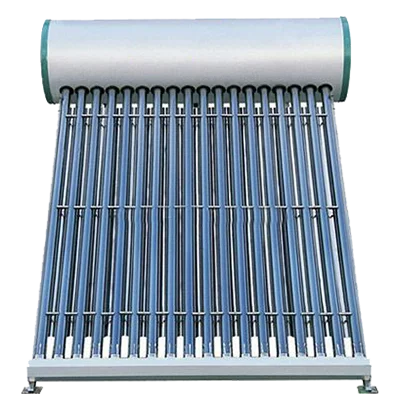
Evacuated tube collector (ETC-based) solar water heaters
Evacuated Tube Collectors are advanced solar water heating components designed for high efficiency and durability. They consist of multiple transparent glass tubes connected to a header pipe, replacing traditional flat blackened plates with cylindrical tubes. Each tube is vacuum-sealed, meaning air is removed to create insulation that minimizes heat loss to the atmosphere. This vacuum technology ensures superior heat retention and performance, even in colder or cloudy conditions. Instead of heating water directly, the vacuum mechanism effectively transfers solar energy, making the collector highly efficient for consistent and reliable hot water generation.
Types of Solar Power System
Flat plate collector (FPC-based) solar water heaters
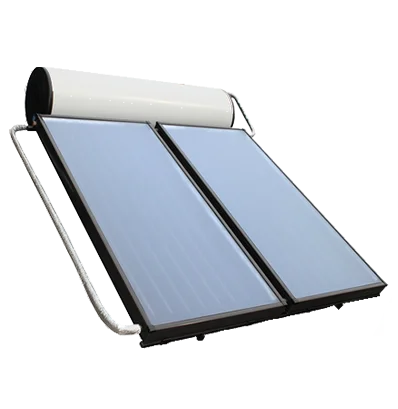
Flat Plate Collector systems efficiently capture solar radiation using an insulated metallic box covered with a transparent glass sheet. Inside, blackened metallic absorber plates with built-in channels or riser tubes circulate water. These selectively coated absorber sheets harness solar energy and transfer the absorbed heat to the flowing water. The design ensures uniform heating, durability, and high efficiency, making Flat Plate Collectors a reliable and widely used technology for solar water heating applications in residential and commercial setups.
- Efficient Design Maximizes sunlight absorption, minimizes heat loss.
- High Heat Transfer Quickly transfers solar heat effectively.
- Reliable Performance Ensures consistent daily hot water.
- Low Maintenance Durable system with minimal upkeep.
- Versatile Application Suitable for homes and businesses.
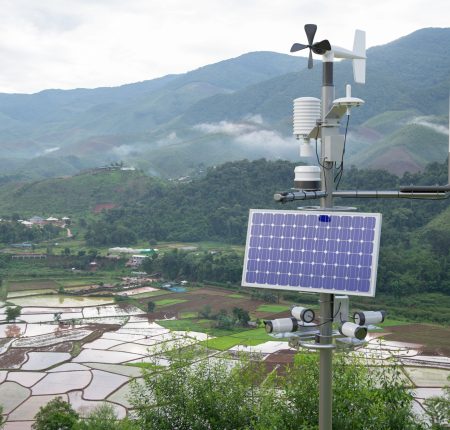
Solar Rooftop Projects We Delivered

Hyderabad

Bandalguda

Madhura Nagar

kukatpally
Our Achievement
ON-GRID/GRID-TIED/NET-METERING
Our Achievement
Our achievements reflect years of dedication, innovation, and excellence in solar and wind energy solutions, delivering sustainable projects and building long-term client trust nationwide
- Solar Power Systems
Why Budding Leaf for Solar Power Systems?
- FAQ’s
Frequently Asked Questions
In general, there are two types of solar water heaters – flat plate collectors (FPC) and Evacuated tube collectors (ETC). FPC are made up of metal plates and have a longer operation life than ETC, which in turn are fragile as they are made of glass. However, ETC solar heaters are cheaper than FPC systems.
They are better suited for colder regions and during sub-zero temperatures, they avoid freezing problem. FPC-based solar water heaters also work well at sub-zero temperatures but their operational cost increases. For places having hard water or more chlorine content, if an FPC solar heater is being installed, it is suggested to get a heat exchanger connected with it to avoid scale deposition on transfer tubes which may otherwise block the water flow and reduce the heating performance. In EPC solar heating systems, water flow does not get blocked but the performance is reduced following the deposition of salts on glass tubes. They can, however, be cleaned.
Since the water heating takes place following diffused radiation in the atmosphere, you will continue to get warm water for a day or two during cloudy days. In such scenarios, an electrical back-up is provided to the storage tank of solar water heater, and is switched on if the water in the tank is not as hot as required.
A grid-connected solar rooftop system is designed in such a way that it shuts down automatically if the power in the grid goes out. This is done to avoid electrocution of the technician during maintenance.
Solar Water Heater
With more people discovering the numerous advantages of renewable energy on the environment and their savings, solar-power energy solutions are gaining popularity and acceptance towards sustainable living.
Among the superior alternatives available for an eco-friendly approach are the solar water heaters, also known as the solar domestic water heating systems. Besides being one of the best choices to get hot water for your home and business, solar water heaters are cost-effective. Designed in such a way to save you from high electricity bills, solar water heaters use abundant renewable solar energy as a fuel to heat water for washing, cleaning and bathing.
The choice of heating system depends on heat requirement, weather conditions, heat transfer, fluid quality, space availability and annual solar radiation.
Budding Leaf Infratech is acclaimed for providing the long-lasting and highly-efficient solutions for solar water heating systems.
TYPES OF SOLAR WATER HEATERS
Broadly, solar water heating systems are of two types: closed loop system and open loop system.
- In the first one, heat exchangers are installed to protect the system from hard water obtained from bore wells or from freezing temperatures in the cold regions.
- In the other type, either thermo syphon or forced circulation system, the water in the system is open to the atmosphere at one point or other. The thermo syphon systems are relatively inexpensive. They are suitable for domestic and small institutional systems, provided the water is treated and potable. The forced circulation systems employ electrical pumps to circulate the water through collectors and storage tanks.
How it Works
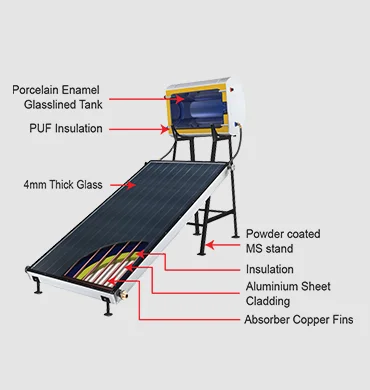
Solar water heating systems are generally installed on the terrace to capture maximum solar energy. They comprise inter connected solar collectors to collect energy and an insulated tank for storing hot water. The water in the solar collectors gets heated during the day time and either pumped or forced into a storage tank for use when required.
Types of Solar Collectors
Types of Solar Collectors
Flat plate collector (FPC-based) solar water heaters
In such systems, solar radiation is absorbed by flat plate collectors which consist of an insulated outer metallic box covered on the top with glass sheet. Inside there are blackened metallic absorber (selectively coated) sheets with built in channels or riser tubes to carry water. The absorber harnesses the solar radiation and transfers the heat to the flowing water.
Evacuated tube collector (ETC-based) solar water heaters
Evacuated tube collectors comprise a number of single, transparent glass tubes which are connected to a header pipe. Unlike flat panel collectors, the cylindrical tubes are used instead of blackened heat absorbing plates. Instead of heating the water directly, air is removed or evacuated from the single tube creating a vacuum. This vacuum significantly reduces the heat losses to the atmosphere making the collector more efficient.
Benefits of Solar Water heater
- Operates without fuel/electricity
- Highly beneficial during winters
- High efficiency, low heat loss
- Longer operating life
- Minimal maintenance cost
- Economical, Eco-Friendly
Applications of Solar Heater
- Residential Complexes
- Educational Institutions
- Large Scale Industries
- Housing Societies
- Hotels & Resorts
- Community Centers
REQUEST A CALL BACK
QUICK LINKS

Need a Roofing Service?
-
+91 818 504 6666+91 818 504 6666
-
info@buddingleafinfra.cominfo@buddingleafinfra.com
-
AddressAddress #507, Riviera Apartments, Dwarakapuri Colony Punjagutta, Hyderabad - 500082, Telangana, INDIA
Download
FAQ’s
Frequently Asked Questions
In general, there are two types of solar water heaters – flat plate collectors (FPC) and Evacuated tube collectors (ETC). FPC are made up of metal plates and have a longer operation life than ETC, which in turn are fragile as they are made of glass. However, ETC solar heaters are cheaper than FPC systems.
They are better suited for colder regions and during sub-zero temperatures, they avoid freezing problem. FPC-based solar water heaters also work well at sub-zero temperatures but their operational cost increases. For places having hard water or more chlorine content, if an FPC solar heater is being installed, it is suggested to get a heat exchanger connected with it to avoid scale deposition on transfer tubes which may otherwise block the water flow and reduce the heating performance. In EPC solar heating systems, water flow does not get blocked but the performance is reduced following the deposition of salts on glass tubes. They can, however, be cleaned.
Since the water heating takes place following diffused radiation in the atmosphere, you will continue to get warm water for a day or two during cloudy days. In such scenarios, an electrical back-up is provided to the storage tank of solar water heater, and is switched on if the water in the tank is not as hot as required.
A grid-connected solar rooftop system is designed in such a way that it shuts down automatically if the power in the grid goes out. This is done to avoid electrocution of the technician during maintenance.